Making a complaint easier to follow: why we built Panaszra Magyar!
From explaining a problem to keeping a complete case file: the idea and development decisions behind Panaszra Magyar!
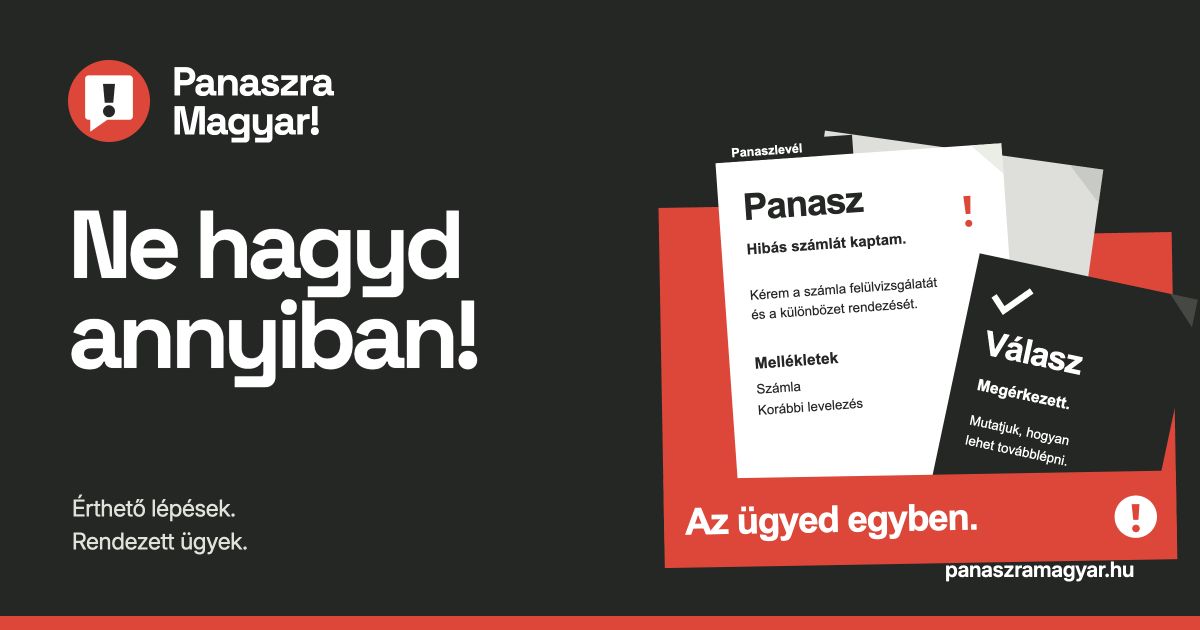
You have an invoice, a photograph and a few earlier messages on your phone. You know what happened, and you want it sorted out. But when you sit down to explain the whole thing, it can be hard to know where to start.
Panaszra Magyar! was built for situations like this. This SSP project helps people put their account of a complaint in order, explain what they are asking for and keep track of what happens next. Its name has a playful Hungarian ring to it. The task behind it is practical: helping someone get from a first sentence to an organised case file.
It began with a plan for the whole process
The first development brief was written in late October 2026. It already brought together describing the problem, keeping attachments, preparing a letter and working through the reply. The aim was to help people see where their case stood when they returned to it later.
Sending a letter can lead to another request for information, a partial answer or an explanation that needs a second reading. At that point, having the original request and the supporting documents together makes the next step easier to understand.
That became the foundation of Panaszra Magyar: a personal case file holding the story, correspondence, timeline and attachments. The interface gives this process a clear structure that someone can follow.
Start with a question people can answer
Getting started received particular attention during development. When someone has a disputed bill or a damaged order, the name of the company is often the first thing they know. Today, starting a case begins with that question: which company or organisation is the problem with?
You can enter a business, service provider or institution, then explain what happened. Available details for known organisations can help fill in the form, and those details remain editable. Next come the documents and the outcome you would like to request.
Take a simple, fictional example: someone does not understand an item on an invoice. They can begin by identifying the invoice, the item in question and the explanation they need. That already makes the situation clearer. The application's job is to help them get there with understandable questions.
Small improvements make a usable product
The next steps included refining sign-in, the mobile layout and backups. Someone who chose to start a case needed to return to that task after signing in. On a phone, examples and the next action still needed to be easy to find and read.
An English interface was added alongside Hungarian. The interface language and the letter language serve different purposes: someone may understand instructions more easily in English while writing to a Hungarian organisation. AI-assisted translation depends on service availability; switching the interface language does not itself translate personal documents.
These details may attract less attention in a demonstration, but they matter during use. Each improvement served the same purpose: making a case easier to start, continue and find again later.
Your documents stay with you, and you decide what to send
Cases and original attachments are saved in the local storage of the browser being used. The application provides a downloadable case package and a separate backup option. Keeping your own backup of important cases matters, because clearing browser data can remove the local copy.
AI assistance requires separate approval to send data for processing. The interface shows which case details and documents would be shared. The user reviews the resulting text and sends any letter or submission themselves.
The next step depends on the type of issue. The Hungarian consumer protection authority's guidance distinguishes an attempt to resolve matters with the business, an individual dispute and questions for an authority. The application therefore makes no promise that one standard letter can settle every situation. A favourable outcome is not guaranteed, and a complex case may require professional help.
Why this belongs in the SSP workshop
Panaszra Magyar grew around a specific task people face. Designing it meant considering the order of questions, the handling of documents and the points where the user makes a decision. AI can play a supporting role where it helps someone understand information or prepare wording.
We take the same approach to a business application. First, we understand the difficulty the user is facing. Then we work through the steps they need to take. That gives us a basis for building an interface in which every part has a clear purpose.
You can see the demonstration and examples on the Panaszra Magyar website. At the time of publication, case management is available to try free of charge with registration and no bank card. The application indicates the current availability of AI assistance.
If there is a task in your business that would be easier to manage through a dedicated interface, tell SSP about it. Start by explaining where the process tends to get stuck. That is enough to begin a useful conversation.